


Augustinus :Over verschillende theorieën over zuivering
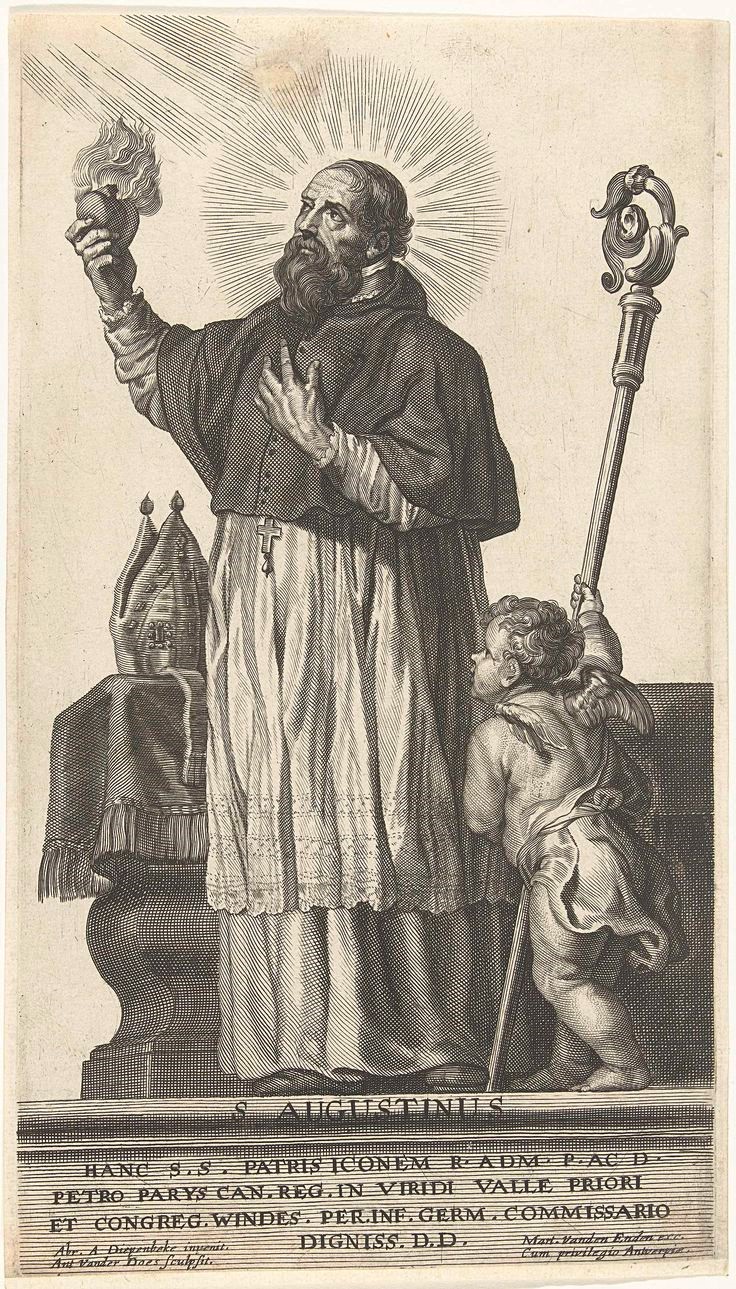
St. Augustinus van Hippo ca. 354-430
Maar als er wordt gezegd dat in het tijdsinterval tussen de dood van dit lichaam en de Laatste Dag van Oordeel en vergelding die zal volgen op de Opstanding, de lichamen van de doden zullen worden blootgesteld aan een vuur van een zodanige aard dat het niet zal worden verbrand. het zal invloed hebben op degenen die zich in dit leven niet hebben overgegeven aan genoegens en bezigheden die zullen worden geconsumeerd als hout, hooi en stoppels, maar die anderen zullen beïnvloeden die dergelijke structuren met zich meedragen; als er wordt gezegd dat zulke wereldsgezindheid, omdat ze vergeeflijk is, zal worden verteerd in het vuur van de verdrukking, hetzij alleen hier, of hier en in het hiernamaals, of hier zodat het hiernamaals niet meer zal zijn – dit spreek ik niet tegen, omdat het mogelijk waar is . Want misschien is zelfs de dood van het lichaam zelf een onderdeel van deze verdrukking, want deze is het gevolg van de eerste overtreding, zodat de tijd die volgt op de dood in elk geval zijn kleur ontleent aan de aard van het gebouw van de mens. Ook de vervolgingen, die de martelaren hebben gekroond, en waar christenen van allerlei soort onder lijden, beproeven beide gebouwen als een vuur, waarbij ze sommige samen met de bouwers zelf verteren, als Christus er niet in wordt gevonden als hun fundament, terwijl ze andere verteren. zonder de bouwers, omdat Christus in hen gevonden wordt, en zij gered worden, zij het met verlies; en andere gebouwen verbruiken ze nog steeds niet, omdat daarin materialen worden aangetroffen die eeuwig blijven bestaan. Aan het einde van de wereld zal er in de tijd van de Antichrist een verdrukking zijn zoals er nog nooit eerder is geweest. Hoeveel gebouwen zullen er dan niet zijn, van goud of van hooi, gebouwd op het beste fundament, Christus Jezus, wat dat vuur zal bewijzen, sommigen vreugde brengend, anderen verlies, maar zonder een van beide te vernietigen, vanwege dit stabiele fundament! (Stad van God, Boek 21.26)
Bron : Filed Under: Allen , Heilige Augustinus ca. 354-430 , Gehenna , Heilige Vaders , Postmortem , Redding
On different theories of purification
St Augustine of Hippo c. 354-430
But as it is said that in the interval of time between the death of this body and the Last Day of Judgement and retribution that will follow the Resurrection, the bodies of the dead will be taken up to a fire of a certain kind that it will not be burnt. it will affect those who have not indulged in pleasures and pastimes in this life that will be consumed like wood, hay and stubble, but those others will affect certain structures with them; if it is said that various worldliness, because it is forgivable, will be consumed in the fire of tribulation, otherwise only here, or here and in the hereafter, or here so that the hereafter will be no more – this I do not contradict, because it may be true. For perhaps even the death of the body itself is part of this tribulation, for it is the consequence of the first movement, so that the time that follows death at least derives its colour from the nature of man’s building. Similarly, the persecutions, which have crowned the martyrs, and where countless of all kinds suffer, test both buildings like a fire, consuming some along with the builders themselves, if Christ is not found in them as their foundation, while they consume others. without the builders, because Christ is inered, albeit at a loss; and other buildings they still do not consume, because in them are found materials that last forever. At the end of the world, in the time of the Antichrist, there will be a tribulation such as there has never been before. How many buildings there will not be then, of gold or of hay, built on the best foundation, Christ Jesus, which that fire will prove, bringing joy to some, loss to others, but without destroying either, because of this stable foundation! (City of God, Book 21.26)
Bron : Filed Under: Allen , Heilige Augustinus ca. 354-430 , Gehenna , Heilige Vaders , Postmortem , Redding
 christelijkeinformatiebron