

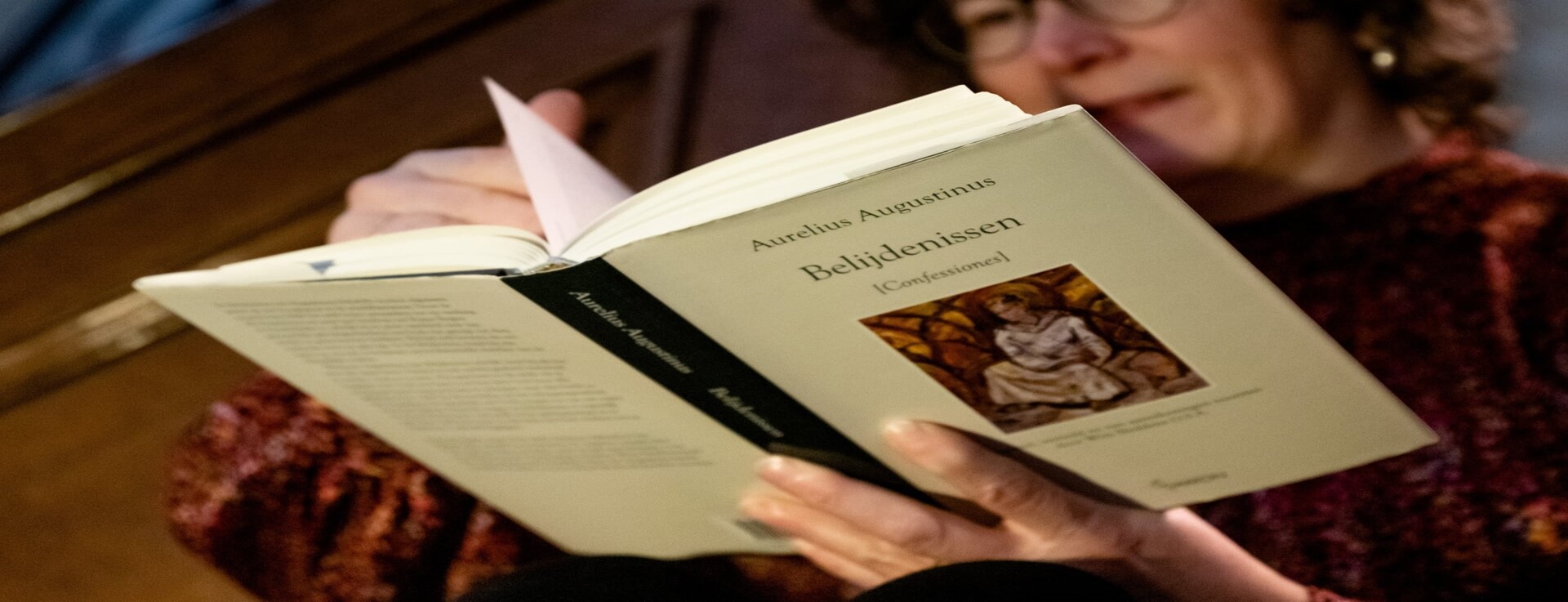
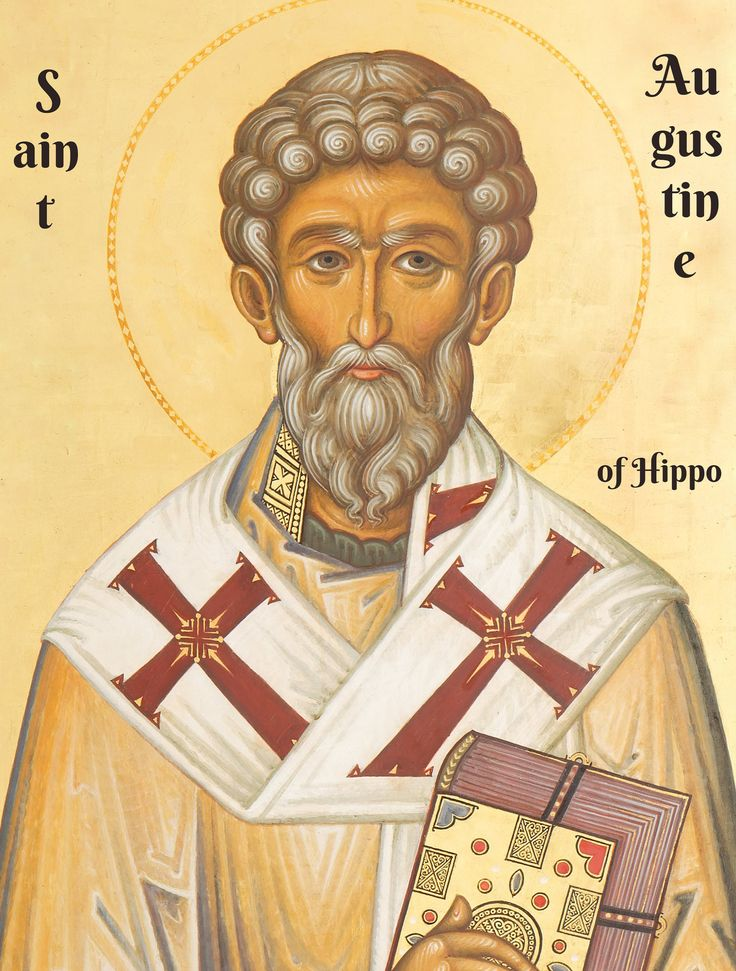
De onrust bij de H. Augustinus van Hippo
Door Gabriël Marcel – Frans christelijk filosoof
Wij hebben ons er rekenschap van kunnen geven dat het van een christelijk gezichtspunt uit niets slechts mogelijk, doch zonder de minste twijfel zelfs onvermijdelijk is, een innerlijke rechtvaardiging te vinden voor de onrust, beschouwd als de beweging waardoor de menselijke ziel zich losmaakt van zichzelf en in zekere zin de genade tegemoet streeft terwijl zij elk welgevallen in zichzelf en zelfs in de zichtbare wereld verwerpt. Het is natuurlijk in deze zin dat wij de woorden moeten verstaan van de beroemde aanroeping waarmee de ‘belijdenissen’ van St Augustinus beginnen : ‘Gij zijt groot o Heer, en oneindig prijzenswaardig. Groot is Uw macht en onberekenbaar Uw wijsheid , en de mens, die een nietig deeltje van Uw schepping is wil Uw lof zingen; de mens, die zijn sterfelijkheid overal met zich draagt, die met zich draagt het getuigenis het getuigenis van zijn zonde en het bewijs de Gij de hoogmoedigen weerstaat. En toch wil hij Uw lof zingen, deze mens, dit nietig deeltje van Uw schepping . Gij zijt het, die hem ertoe brengt vreugde te zoeken in het zingen van Uw lof, want Gij hebt ons voor U gemaakt, en onrustig is ons hart totdat het rust in U.’
Maar onmiddellijk daarna vraagt Augustinus zich af, of een dergelijke aanroepng wel zin heeft en of zij zelfs wel mogelijk is. ‘Is er in mij’, zo vraagt hij, ‘een plaats waar mijn God kan komen ? ‘Omdat ik zelf ben, waarom zou ik U dan vragen in mij te komen, terwijl ik er niet zou zijn als Gij niet in mij waart ?… ‘ ‘Ik zou er dus niet zijn, mijn God, ik zou er volstrekt niet zijn als Gij niet in mij waart. Of liever, ik zou er niet zijn als ik niet in U was, van wie, door wie en in wie alle dingen zijn ‘ En terstonds hopen zich de vragen opeen welke voortvloeien uit de schijnbare tegenspraak tussen de goddelijke alomtegenwoordigheid en het feit, dat ik God schijn te vragen in mij te komen, alsof Hij niet reeds in mij was.
Hier worden wij dus wel geplaatst voor een vraagstelling, welke de naam van metaphysieke of religieuze onrust verdient, want het gaat in geen enkel opzicht om gewone speculatieve nieuwsgierigheid. De gestelde vraag raakt op de allerintiemste wijze aan het leven zelf van mijn ziel.
Etienne Gilson zegt in zijn ‘Introduction a l’étude de St Augustin’ dat de grond van deze onrust in werkelijkheid gezocht moet worden in de radicale ontoereikendheid, het wezenlijk tekort waaraan de mens lijdt door zijn hoedanigheid van uit het niets geheven schepsel. ‘Daar hij in de orde van het zijn zichzelf niet genoeg is, kan hij zichzelf ook niet genoeg zijn in de orde van het kennen, noch in de orde van het doen : maar juist dit tekort, waaraan hij lijdt, richt hem op Degene die alleen in staat is hem in alles van overvloed te voorzien. Dit is de bron van de vruchtbare onrust, welke de mens onophoudelijk kwelt, doch hem tevens redt coordat ze hem, die voor God gemaakt is, slechts in God vrede en rust laat vinden.’ St Augustinus merkt in ‘De civitate Dei’ op, dat wij onze eigen wijsheid hadden kunnen voortbrengen als onze natuur door ons zelf gemaakt gemaakt was : ‘onze liefde, die uitging van ons zelf en betrokken en betrokken was op onszelf, was dan genoeg geweest om onze gelukzaligheid te verzekeren, en we geen behoefte hebben gehad aan enig goed, vreemd eid te genieten : maar omdat onze natuur aan God haar aanzijn dankt, is het voor geen twijfel vatbaar dat wij, om de waarheid te leren kennen (ut vera sapiamus) het niet zonder Zijn onderrichting kunnen stellen.’ Hem komt het ons toe ons datgene te verschaffen, wat Augustinus de ‘suavitas intima’ noemt, en wat ik het liefst zou vertalen met de woorden die innerlijke of inwendige balsen’ welke het beginsel is van onze gelukzaligheid
Het is, geloof ik, in dit verband allerbelangrijkst niet te vergeten, dat de zo kennelijke oorspronkelijkheid van Augustinus’denken enerzijds voortvloeit uit het feit dat hij bekeerling was, en dat hij er op deze wijze toe kwam, nadenkend over zijn bekering, een wonderlijk nauwkeurig besef te krijgen van de Genade, van het werk der Genade in ons. De ‘Belijdenissen’ vormen een getuigenis van zeker onovertrokken waarde aangaande dit beslissende feit van de bekering. Van rationalistisch standpunt zal deze altijd onbegrijpelijk blijven, zodat degenen die haar van buitenaf pogen te benaderen, derhalve onherroepelijk geneigd zullen zijn haar natuur te miskennen of zelfs te ontledigen. Er is geen gemene maat en er kan ook geen gemene maat zijn tussen de doorleefde ervaring van de bekeerling en de wijze, waarop iemand deze probeert te verstaan die daar geen deel aan heeft en dus geneigd is er iets anders voor in de plaats te stellen…….
Ik meen mij niet te vergissen als ik zeg, dat de overweging van dit onvermijdelijke verschil van inzicht een der uitgangspunten is van de existentie-filosofie, zoals die zich bij de moderne denkers heeft ontwikkeld. In deze zin heeft men niet zonder grond in St.Augustinus een voorloper kunnen zien van wat men met een barbaars en door mij persoonlijk verworpen woord existentialisme noemt.
Doen deze opmerkingen ons van ons onderwerp afdwalen ? Kennelijk is dat niet waar. Want wij moeten altijd voor ogen houden, dat onrust positieve waarde verkrijgt in het licht van een bewustzijn, dat in zichzelf de werking van de genade heeft bespeurd. Wij zullen dit natuurlijk nog eens opnieuw moeten vaststellen wanneer wij aan de bespreking van Pascal toe zijn.
Maar laten wij intussen nu reeds constateren, dat het omgekeerde niet waar is, tenminste niet waaar schijnt . Er kunnen gevallen zijn waarin de onrust als waardevol wordt gezien, zonder dat hij, die haar weldadige invloed ondergaat en erkent, zichzelf ook maar op enigerlei wijze geraakt acht door de genade. Bij St.Augustinus evenwel en bij zijn geestverwanten is dit verband onmiskenbaar.
Ik moet hieraan toevoegen,dat er rechtstreeks verband bestaat met de evangelische gedachten, die ik in een vorig hoofstuk aanhaalde, als St.Augustinus zich bijvoorbeeld in het achtste boek van zijn ‘Belijdenissen’ op de volgende wijze uitdrukt :
Goede God, hoe kan het toch komen, dat de mens zich nog meer kan verheugen over het heil van een ziel, als hij daaraan wanhoopte en hij haar verlost zag uit een groot gevaar, dan als hij altijd enige hoop omtrent haar lot is blijven koesteren en het gevaar minder ernstig was ?…. Hoe kan het toch komen, dat de ziel meer vreugde ervaart bij het vinden of herkrijgen van wat zij liefheeft, dan bij het voortdurend bezit daarvan ? Vele andere voorbeelden bevestigen dit; alles getuigt luidkeels van alle kanten : zo is het !… Iemand waarvan wij houden is ziek; zijn polsslag leert ons dat hij in gevaar verkeert; allen die zijn genezing wensen zijn tegelijk met hem ziek in hun ziel. De beterschap treedt in. Nu loopt hij rond zonder nochtans zijn oude kracht herwonnen te hebben, en reeds is er een vreugde, zoals er nooit geweest is toen hij vroeger volop sterk en gezond rondliep.’
‘Wat betekent dit, mijn Heer en mijn God ?…. Ach ja, dat Gij verheven zijt in de hoogten en diep in de afgronden ! Nooit verwijdert Gij U van ons, en toch : hoe moeilijk is het tot U te komen !?
Men ziet hier dus weer de Alles overtreffende waard van deze onrust, die de menselijke ziel er toe drijft zonder ophouden van het ene ding te gaan tot het andere (ik citeer hier weer Etienne Gilson)alsof de volledige voldoening, welke de kennis van het ene hem niet geschonken heeft, hem verschaft zou kunnen worden door de kennis van iets anders. In werkelijkheid bestaat er geen vrede, en derhalve ook geen gelukzaligheid voor ons denken, hoe lang het dit onderzoek ook voortzet, zelfs niet in de veronderstelling dat het ons slechts tot de ene waarheid na de andere zou voeren. Wat is de gelukzaligheid immers anders dan dat de ziel staat in tegenwoordigheid van een laatste waarheid, die tegelijk het enige Goed is, omdat zij God is ? Doch dit Goed dat wij begeren, dit Ware waarnaar ons verlangen uitgaat, het is reeds in zeker opzicht in ons, en door beroep te doen op een beschouwing over het geheugen tracht Augustinus ons enigzins een voorstelling te geven, van welke aard deze inwoning van God zou kunnen zijn in de mens die Hem zoekt.
Wij moeten hier de onvergetelijkie bladzijden van het tiende boek van de Belijdenissen bijnemen, waar St.Augustinus, als hij zich gesteld ziet voor het mysterie van het geheugen, geslagen wordt met een waarlijk religieuze verbazing. ‘zelfs als mijn tong zwijgt en mijn keel stil blijft, kan ik zingen naar believen, en al heb ik ook voorstellingen van kleuren, zij komen mij niet in de weg en storen mij niet terwijl ik bezig ben met die andere schat welke mijn oren mij hebben verschaft. Zo kan ik naar believen de indrukken, die de andere zintuigen mij gebracht en in mij vergaard hebben weer aan mij voorbij laten gaan. Dit alles speelt zich in mijn binnenste af, in het weidse paleis van mijn geheugen…. Groot, mijn God, is deze macht van het geheugen…. ; ja zeker, zeer groot. Het is een geweldig, een onmetelijk heiligdom. Wie is ooit tot de uithoeken ervan doorgedrongen ! Toch is het iets anders dan een vermogen van mijn geest, dat voortvloeit ui mijn natuur.
Maar ik kan mij niet volledig voorstellen wat ik ben. Is de geest dan te eng om zichzelf te kunnen bevatten ? Waar blijft dan datgene wat hij van zichzelf niet bevatten kan ? Zou dit dan buiten hem zijn en niet in hem ? Maar op welke wijze bevat hij het niet ? Deze gedachte doet mij geheel verbaasd staan, en ik voel mij met verbijstering geslagen.
Ik ben dus als het ware wezenlijk ongelijk aan mijzelve; ik ben te groot voor mij. Als hij dieper doordringt in dit mysterie komt St.Augustinus om te beginnen tot de erkentenis, dat God zelf op zekere wijze in ons geheugen aanwezig is. Dit echter zou natuurlijk ondenkbaar zijn, wanneer ons geheugen iets was dat dingen bevat. Het geheugen moet in ons meer zijn dan wijzelve, zodanig dat wij tenslotte God vinden in God. ‘In ‘De Trinitate’ komt St.Augustinus derhalve tot de uitspraak, dat de ziel, wanneer zij zich haar Heer herinnert omdat zij de Geest ontvangen heeft, dan heel goed beseft dat zij onderricht wordt door het inwendig leergezag dat Hij over haar uitoefent. Omdat God overal in Zijn totaliteit tegenwoordi is, leeft en beweegt zich de ziel in Hem, en zo kan zij zich Hem ook herinneren.
Derhalve zouden wij God dus niet liefhebben, als Hij ons niet eerst bemind had. Er bestaat geen enkele andere leer die volstrekter beheerst wordt door de gedachte dat God liefde is, en men heeft terecht wel eens gezegd dat een leer augustiniaans is, naarmate zij vollediger geneigd is haar organisch middelpunt te zoeken in de liefde.
Het is dus heel duidelijk dat de onrust hier slechts een gissingsmiddel is, of anders gezegd een zuurdesem, zonder welke de ziel zich niet werkelijk zou kunnen bekeren. Want deze zuurdesem is evenzeer het werk van God, dat de Genade verricht in de diepten bvan het schepsel.
Gabriël Marcel (1889–1973) was een filosoof, toneelcriticus, toneelschrijver en muzikant. Hij bekeerde zich in 1929 tot het katholicisme en zijn filosofie werd later beschreven als “Christelijk existentialisme” (het meest bekend in Jean-Paul Sartre’s “Existentialisme is een humanisme”), een term die hij aanvankelijk onderschreef maar later verwierp.
Dit artikel is genomen uit één van zijn boeken : ‘De mens zichzelf een vraagteken’ pp 100 tot 105.
ENGELSE TEKST VAN DIT ARTIKEL
The unrest of Saint Augustine of Hippo
We have been able to realize that from a Christian point of view it is not only possible, but without the slightest doubt even inevitable, to find an inner justification for the unrest, viewed as the movement whereby the human soul detaches itself from itself and, in a sense, strives towards grace while rejecting all pleasure in itself and even in the visible world. It is naturally in this sense that we must understand the words of the famous invocation with which St Augustine’s ‘confessions’ begin: ‘Thou art great, O Lord, and infinitely praiseworthy. Great is Your power and incalculable Your wisdom, and man, who is a tiny part of Your creation, wants to sing Your praises; the man who carries his mortality with him everywhere, he carries with him the testimony of his sin and the proof that you resist the proud. And yet he wants to sing Your praises, this man, this insignificant part of Your creation. It is You who lead him to delight in singing Your praises, for You have made us for Yourself, and our hearts are restless until they rest in You.”
But immediately afterwards Augustine wonders whether such an invocation makes sense and whether it is even possible. ‘Is there in me’, he asks, ‘a place where my God can come? ‘Since I am myself, why should I ask You to come into me when I am not there to our own being, for this blessedness. Here we are therefore confronted with a question that deserves the name of metaphysical or religious unrest, because it is in no way a matter of ordinary speculative curiosity. The question asked touches in the most intimate way the very life of my soul.
Etienne Gilson says in his ‘Introduction a l’étude de St Augustin’ that the root of this unrest must in reality be sought in the radical inadequacy, the essential deficiency that man suffers from due to his status as a creature raised from nothing. ‘Since he is not enough for himself in the order of being, he cannot be enough for himself in the order of knowing, nor in the order of doing: but this very deficiency from which he suffers directs him to the One who alone is able to provide him with abundance in everything. This is the source of the fruitful unrest, which torments man incessantly, but at the same time saves him by allowing him, who is made for God, to find peace and rest only in God.’ St Augustine notes in ‘De civitate Dei’ that we could have produced our own wisdom if our nature had been made by ourselves: ‘our love, which proceeded from ourselves and was concerned and concerned with ourselves, would then have been enough to secure our happiness, and we have had no need to enjoy any good, strange thing: but because our nature owes its existence to God, there can be no doubt that in order to know the truth (ut vera sapiamus) we cannot do without His instruction.’ It belongs to Him to provide us with what Augustine calls the ‘suavitas intima’, and which I would prefer to translate with the words ‘inward or internal balms’ which is the principle of our bliss.
It is, I believe, in this Most importantly, it is important not to forget that the apparent originality of Augustine’s thinking stems, on the one hand, from the fact that he was a convert, and that in this way, reflecting on his conversion, he came to acquire a wonderfully accurate sense of Grace, of the work of Grace in us. The ‘Confessions’ constitute a testimony of unsurpassed value concerning this decisive fact of conversion. From a rationalist point of view it will always remain incomprehensible, so that those who attempt to approach it from outside will therefore be irrevocably inclined to misunderstand or even empty its nature. There is no common measure and there can be no common measure between the lived experience of the convert and the way in which someone tries to understand it who has no part in it and is therefore inclined to substitute something else for it. I do not think I am not mistaken when I say that the consideration of this inevitable difference of insight is one of the starting points of the philosophy of existence as it has developed among modern thinkers. In this sense, it is not without reason that one could see in St. Augustine a precursor of what is called existentialism, using a barbaric word that I personally reject.
Do these comments make us stray from our topic? Apparently that is not true. For we must always keep in mind that unrest acquires positive value in the light of a consciousness that has perceived within itself the working of grace. We will of course have to determine this again when we come to discussing Pascal.
But in the meantime let us conclude that the reverse is not true, or at least does not seem to be true. There may be cases in which unrest is regarded as valuable, without he who experiences and recognizes its beneficial influence considering himself in any way touched by grace. However, with St. Augustine and his kindred spirits this connection is unmistakable.
I must add that there is a direct connection with the evangelical thoughts that I mentioned in a previous chapter, when, for example, St. Augustine expresses himself in the eighth book of his ‘Confessions’ in the following way:
Good God, how can it be that a man can rejoice even more in the salvation of a soul if he despaired of it and saw it delivered from a great danger, than if he always continued to cherish some hope about its fate? and the danger was less serious?…. How can it be that the soul experiences more joy in finding or regaining what it loves than in continually possessing it? Many other examples confirm this; everything testifies loudly from all sides: that’s how it is!… Someone we love is sick; his pulse tells us he is in danger; all who desire his healing are sick in their souls along with him. Improvement sets in. Now he walks around without having regained his old strength, and already there is a joy, such as there never was when he used to walk around fully strong and healthy.’
‘What does this mean, my Lord and my God?….Ah yes, that You are exalted in the heights and in the depths of the bottomless! You never move away from us, and yet: how difficult is it to come to You!?
To do this, comment to us on this subject go astray ? Obviously, that’s not true. For we must always keep in mind, that the agitation of the positive value and, in the light of the consciousness, which is, in itself, have the effect of grace is detected. We will, of course, once again, to determine if we are on the discussion of the Pascal are. But let us, in the meantime, already noticed, that the reverse is not true, at least not in waaar as you say . There may be cases in which the turbulence as worthy of being seen without it, which is its beneficial effect goes down, and recognize themselves, but in any way, hit eight out of the water. With Approx.St. augustine, however, to be kindred spirits in this regard is undeniable. I should also add that there is a direct relationship with the evangelical mind, that I have seen in a previous chapter, stated, as a St.St. augustine, for example, in the eighth book of his ‘Confessions’ in the following statement :
Good God, how is it possible that the human being can enjoy is the salvation of one’s soul, as it wanhoopte, and he is redeemed and saw a great danger, as he always is to be any hope of its destiny is to continue to nurture it and to the danger as serious as it was ?…. How can it be, that the soul is more of a joy to experience, to find it or recover from what she loves, and continuous possession of it ? Many other examples confirm that everything bears witness to all the responses very loudly in from all sides, and there it is !… Someone we love is sick, his pulse, tells us that he is in danger, all of which are healing, wishes, at the same time with him to get sick in their soul. The change for the better occurs. Now he is walking around, without, however, his old strength, renewed, and it is already a joy, and such as there has never been a time when he used to be plenty strong, healthy, and around them.’
“What does this mean, my Lord and my God….. Ah, yes, that Thou be exalted unto the high places and deep into the abyss ! Never remove Thou from us to You, and yet how difficult it is to come to You !?
You can see here, we have the transcendent worth of this turmoil, the human soul and it drives non-stop from one thing to another (and I quote here, by Etienne Gilson)if the payment is made in full, which, to the knowledge of the one, to him, is not given to him: provided, may be, through the knowledge of something else. In fact, there is no peace in it, and not happiness, is for us to think about how long it is for this research to continue, even assuming that the us is only one truth, one after the other, it would run. What is happiness, after all, that is the soul standing in the presence of an ultimate truth, which is at the same time, it is only right, because it is God’s ? It is Good that we desire, it was referred to us with the desire cometh, it is already in a certain sense, in the us, and by an appeal to and a reflection on memory, try to st. Augustine, us, and a little bit of an idea of what is the nature of this indwelling of God in man, which is looking for Him.
We must take here the unforgettable pages of the tenth book of the Confessions, where St. Augustine, faced with the mystery of memory, is struck with a truly religious amazement. Even if my tongue is silent and my throat remains still, I can sing at will, and even if I have representations of colors, they do not come in my way and do not disturb me while I am occupied with that other treasure which my ears have provided for me. Thus, at will I can let the impressions, which the other senses have brought to me and amassed in me, pass me by. All this takes place inside me, in the vast palace of my memory…. Great, my God, is this power of memory…. ; yes indeed, very great. It is a great, an immeasurable sanctuary. Who has ever penetrated to the corners of it ! Yet it is something other than an ability of my mind, arising from my nature.
But I cannot fully imagine what I am. Is the mind then too narrow to comprehend itself ? Where then is that which he cannot comprehend of himself ? Would this then be outside him and not in him ? But in what way does he not contain it ? This thought leaves me completely puzzled, and I feel struck with bewilderment.
I am, as it were, to be materially dissimilar to myself; ” I am too big for me. As the deeper it penetrates into the question comes up: Approx.St. augustine, in order to begin with the recognition that God, himself, in a certain way, in our memory. This, however, is, of course, would have been unthinkable if the memory was of things. The memory must be in the us for more than wijzelve in such a way that we are, after God, to find God. In De Trinitate’, comes the St.Augustine, therefore, the court said, that the soul, when the Lord remember them because they are the Spirit, you are very well aware that they are teaching in the inner teaching that He was on her territory. Because God is everywhere and in the whole tegenwoordi, it lives and moves in the soul of Him, and so it can also remind you. Therefore, we would be God, not love, if He does not first love had been. There is no other doctrine, volstrekter is obsessed with the idea that God is love, and he has rightly been said that the doctrine augustiniaans, as they are more likely, it is her organic center-to-find in love. It is, therefore, quite clear that the anxiety this is just a gissingsmiddel, or, in other words, a yeast, in which the soul does not actually converted. Because of this, yeast is, of course, is the work of God, that the Grace, being made in the depths of the creature.
Gabriel Marcel (1889-1973) was a philosopher, drama critic, playwright and musician. He converted to Catholicism in 1929 and his philosophy was later described as “Christian existentialism” (best known in Jean-Paul Sartre’s “Existentialism is a humanism”), a term he initially endorsed but later rejected.
This article is taken from one of his books : “Man himself a question mark” pp 100 to 105.
 christelijkeinformatiebron